


If we’re thinking about vital organs, the brain and heart tend to come to mind first. As vital as they certainly are, there’s another organ working behind the scenes, performing over 500 functions that are necessary for us to survive: the liver. In the upper right quadrant of your abdominal cavity, this incredible organ is a factory of metabolism, a detoxification expert, and a subtle guardian of your health.
Let’s explore the science-based reasons why the liver is indeed the body’s most essential organ.
1. The Body’s CPU: Metabolism and Energy Management
Studies always emphasize the liver’s unmatched position in metabolism. All the nutrients your body derives from your digestive tract – carbohydrates, proteins, and fats – initially travel to the liver
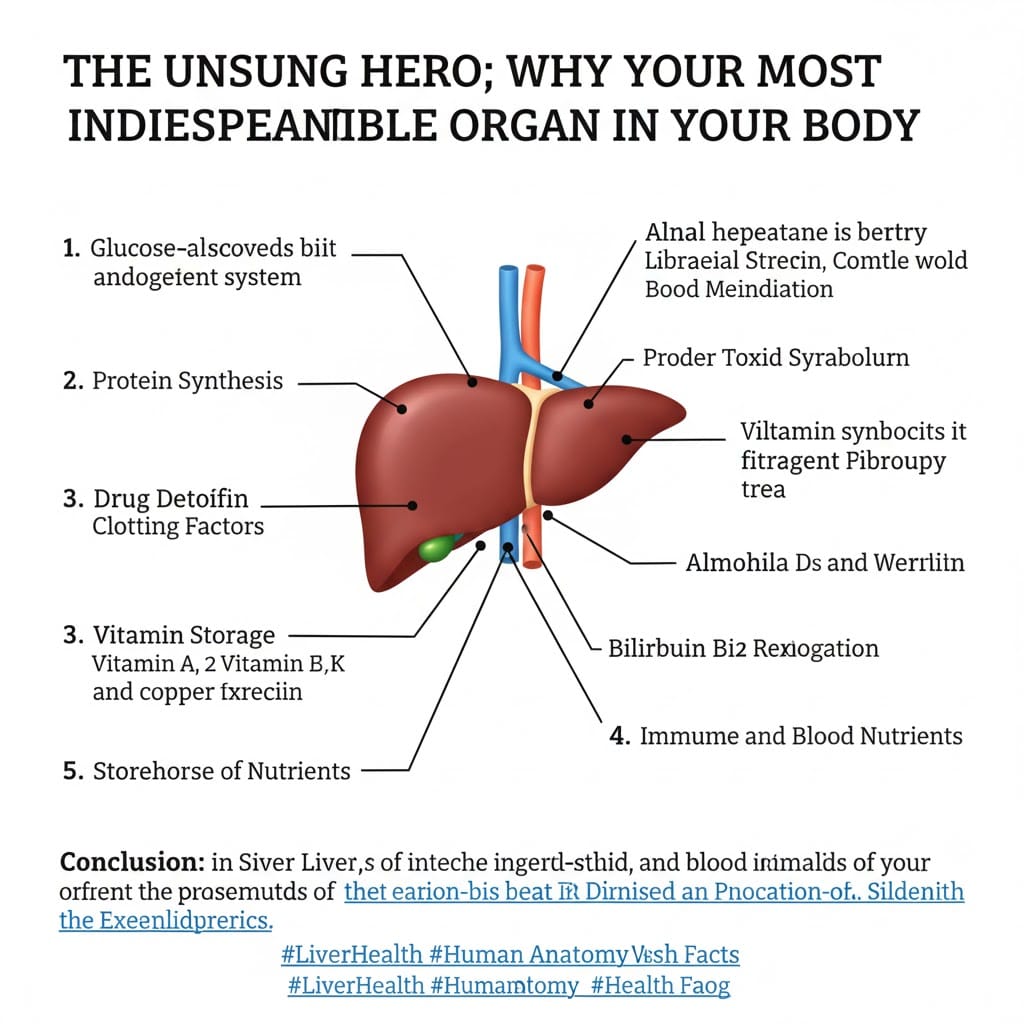
Glucose Homeostasis: Your liver is instrumental in maintaining your blood sugar level. It stores excess glucose as glycogen when you eat and breaks down glycogen into glucose (glycogenolysis) or even generates new glucose from other molecules (gluconeogenesis) when blood glucose drops (e.g., between meals or during exercise) so that your brain and muscles receive a continuous energy supply (Petersen et al., 2017). Its absence would result in lethal hypoglycemia or hyperglycemia.
Protein Synthesis: The liver is the primary site for the synthesis of most of the plasma proteins, including albumin (which controls osmotic pressure), coagulation factors (required for blood clotting), and transport proteins (which carry hormones, vitamins, and minerals in the body) (Lim & Kim, 2017).
Fat Metabolism: It takes part in the synthesis of cholesterol, triglycerides, and lipoproteins, and in converting excess carbohydrates and proteins into fatty acids for storage.
2. The Master Detoxifier: Protecting Your Body from Harm
Detoxification is one of the liver’s most recognized functions. Anything you consume, including food additives, drugs, alcohol, environmental toxins must pass through the liver, an extremely sophisticated filter system.
Drug Metabolism: The liver contains an extremely high number of enzymes (e.g., cytochrome P450 enzymes) that metabolize drugs, rendering them less harmful and more easily eliminated from the body (Anzenbacher & Anzenbacherová, 2001). It is a significant function for preventing harmful substances from building up.
Alcohol Detoxification: It breaks down alcohol into less harmful substances, protecting other organs from alcohol’s toxic effects. Chronic or excessive alcohol consumption, nevertheless, can overwhelm the liver, leading to alcoholic liver disease.
Waste Removal: The liver converts ammonia (a toxic byproduct of protein metabolism) to urea, which is then eliminated through the kidneys. It also breaks down bilirubin, a waste byproduct of the breakdown of red blood cells, into bile for elimination (Stieger & Hofmann, 2001).
3. The Storehouse: Vital Nutrients and Defense
Aside from its metabolic and detoxifying roles, the liver also serves as a vital storage facility and as a key player in immunity.
Storage of Vitamin and Minerals: It stores high amounts of essential vitamins (A, D, E, K, and B12) and minerals (copper, iron) and supplies them to the blood as needed (Sherlock & Dooley, 2008). The reservoir ensures a steady supply of these micronutrients in spite of periods of inadequate dietary intake.
Immune Function: The liver has a unique population of immune cells, including Kupffer cells (resident macrophages), which remove bacteria, viruses, and other pathogens from the circulation, acting as a vital first line of defense against systemic infection (Bode et al., 2019).
Conclusion: A Resilient, Yet Vulnerable Organ
With its myriad life-sustaining activities, it’s no surprise the liver is considered the body’s most important organ. Its impressive regenerative capacity makes it extremely resilient to injury, but this tolerance is not boundless. Lifestyle choices, such as diet, alcohol consumption, and exposure to toxins, play a critical role in liver wellness.
Being aware of the liver’s important functions makes one realize the necessity to protect it. A well-balanced diet, abstaining from too much alcohol, being slim, and avoiding unnecessary medications are necessary to maintain the safety of this precious organ.
References:
- Anzenbacher, P., & Anzenbacherová, E. (2001). Cytochromes P450 and metabolism of xenobiotics. Cellular and Molecular Life Sciences CMLS, 58(5-6), 737-747.
- Bode, J. G., et al. (2019). Liver immunology and its role in inflammation and cancer. International Journal of Molecular Sciences, 20(3), 604.
- Lim, K. T., & Kim, M. K. (2017). Hepatic protein synthesis and metabolic regulation. Clinics and Research in Hepatology and Gastroenterology, 41(5), 517-523.
- Petersen, M. C., et al. (2017). Mechanisms of insulin action and insulin resistance. Physiological Reviews, 97(2), 527-604.
- Sherlock, S., & Dooley, J. (2008). Diseases of the Liver and Biliary System. John Wiley & Sons.
- Stieger, B., & Hofmann, A. F. (2001). Regulation of hepatic bile formation. Physiological Reviews, 81(1), 229-281.
